
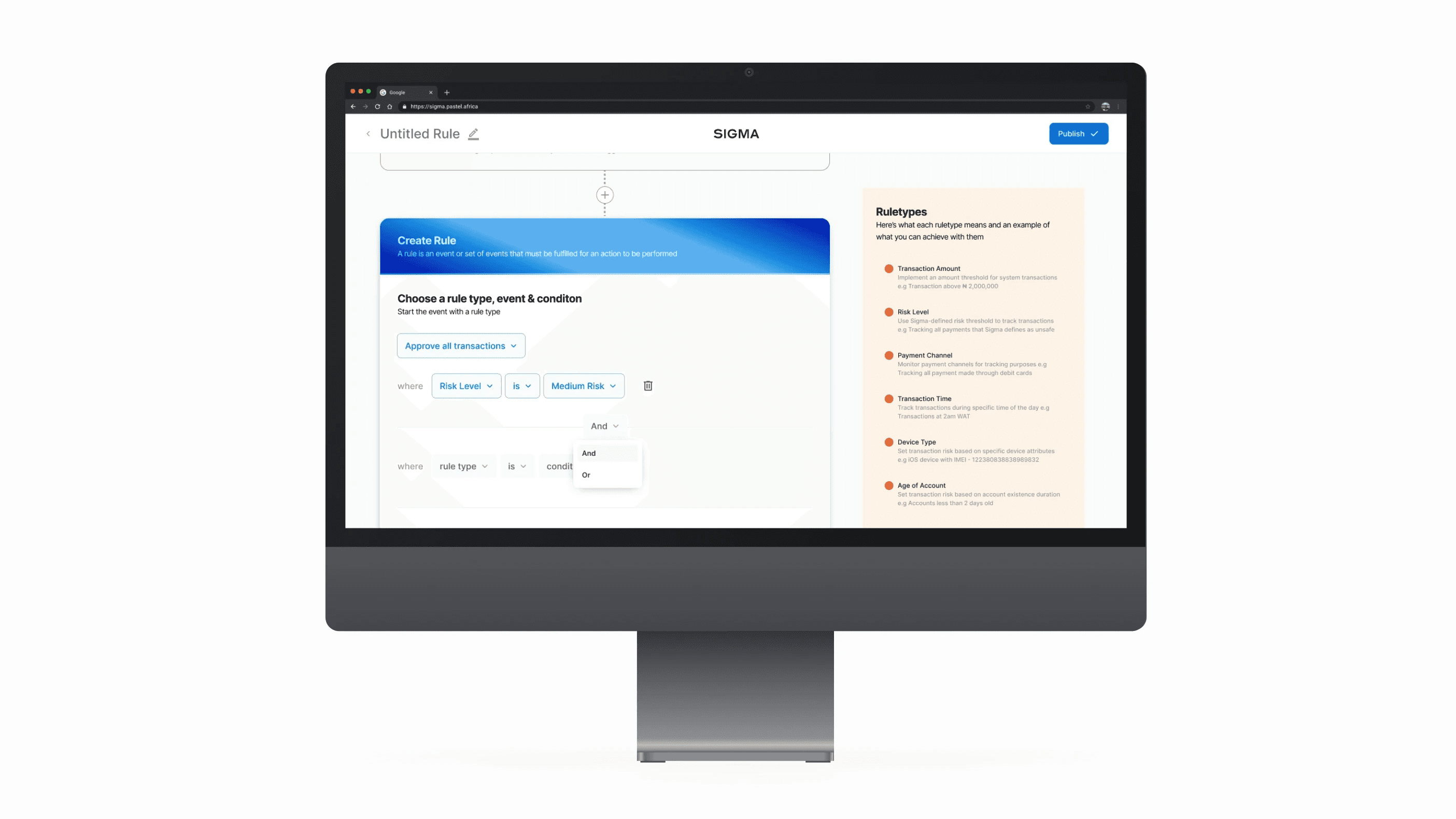
Turning an internal tool into a SaaS platform
Fraud is a growing problem across Africa.
Since 2020, financial institutions have lost more than $201B to fraud.
Sigma started as our internal tool for detecting suspicious transactions and assessing credit risk. It worked well enough for us, but it wasn’t built for anyone else.
As the company shifted its focus toward AI-driven finance, we saw an opportunity:
turn Sigma into a polished, customer-facing product.
I led the end-to-end design of the new web experience, from rethinking the information architecture to shaping the interaction patterns and defining a clearer, more modern visual system.
The gap we saw
Sigma had the right intelligence but the wrong experience.
The tool was functional, dense, and built for our internal data team.
New users would struggle to find meaning in the noise.
This was the real challenge:
How do you transform a tool meant for experts into a product anyone can use?
The goal wasn’t a facelift.
It was to create clarity where there was none.
Understanding the old system
Because I wasn’t familiar with the internal platform, I saw it the way a first-time user would.
That turned out to be an advantage.
The issues were obvious:
No hierarchy
Hard-to-navigate structure
Information spread everywhere
High cognitive load
Inconsistent patterns
It was the kind of product you learned out of necessity, not by intuition.
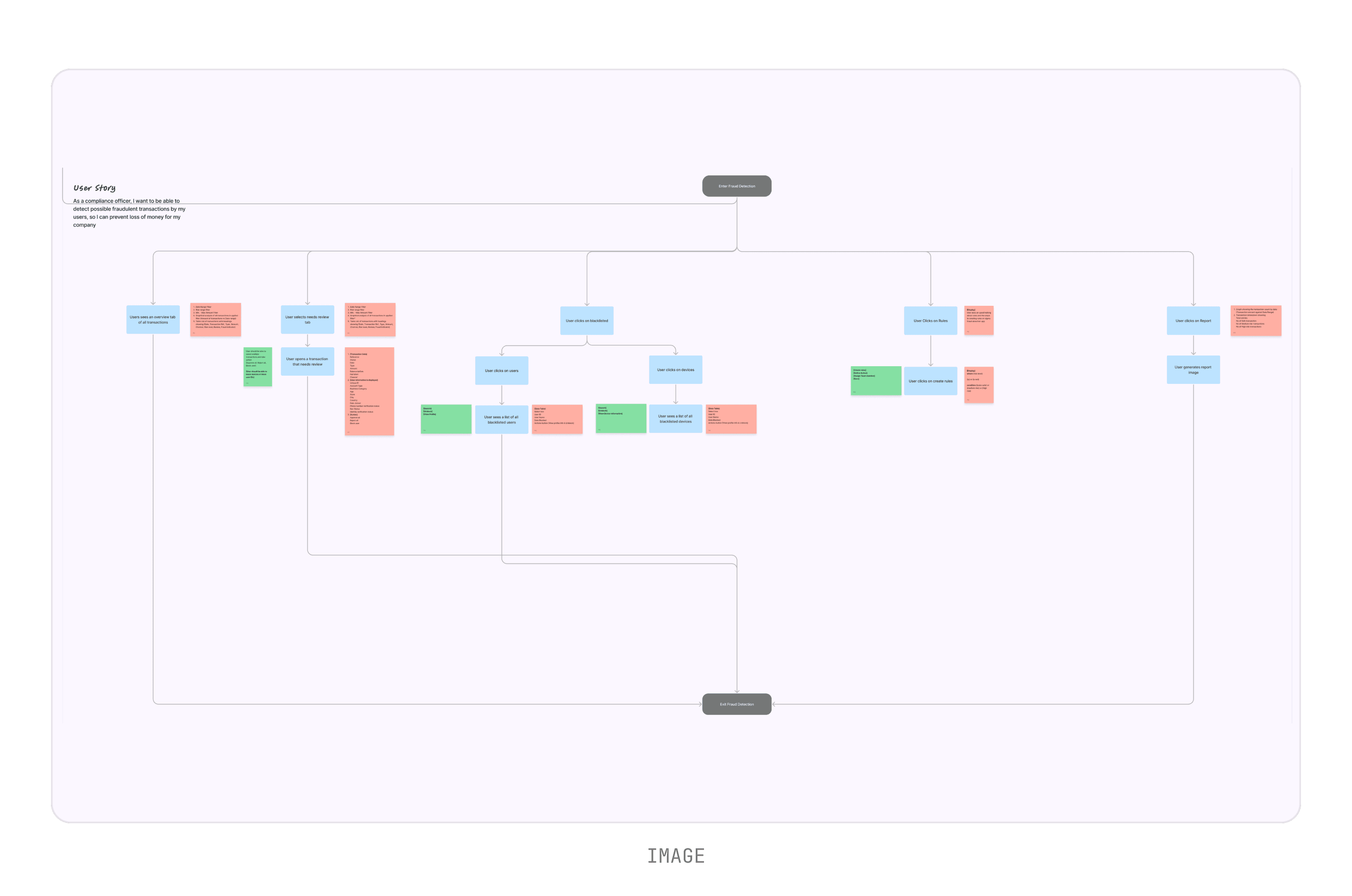
I mapped the flows, ran a heuristic audit, and pulled out the patterns that caused friction.
Most of the audit is covered by NDA, but the theme was clear,
Sigma needed structure before it needed style.
The insight that shifted everything
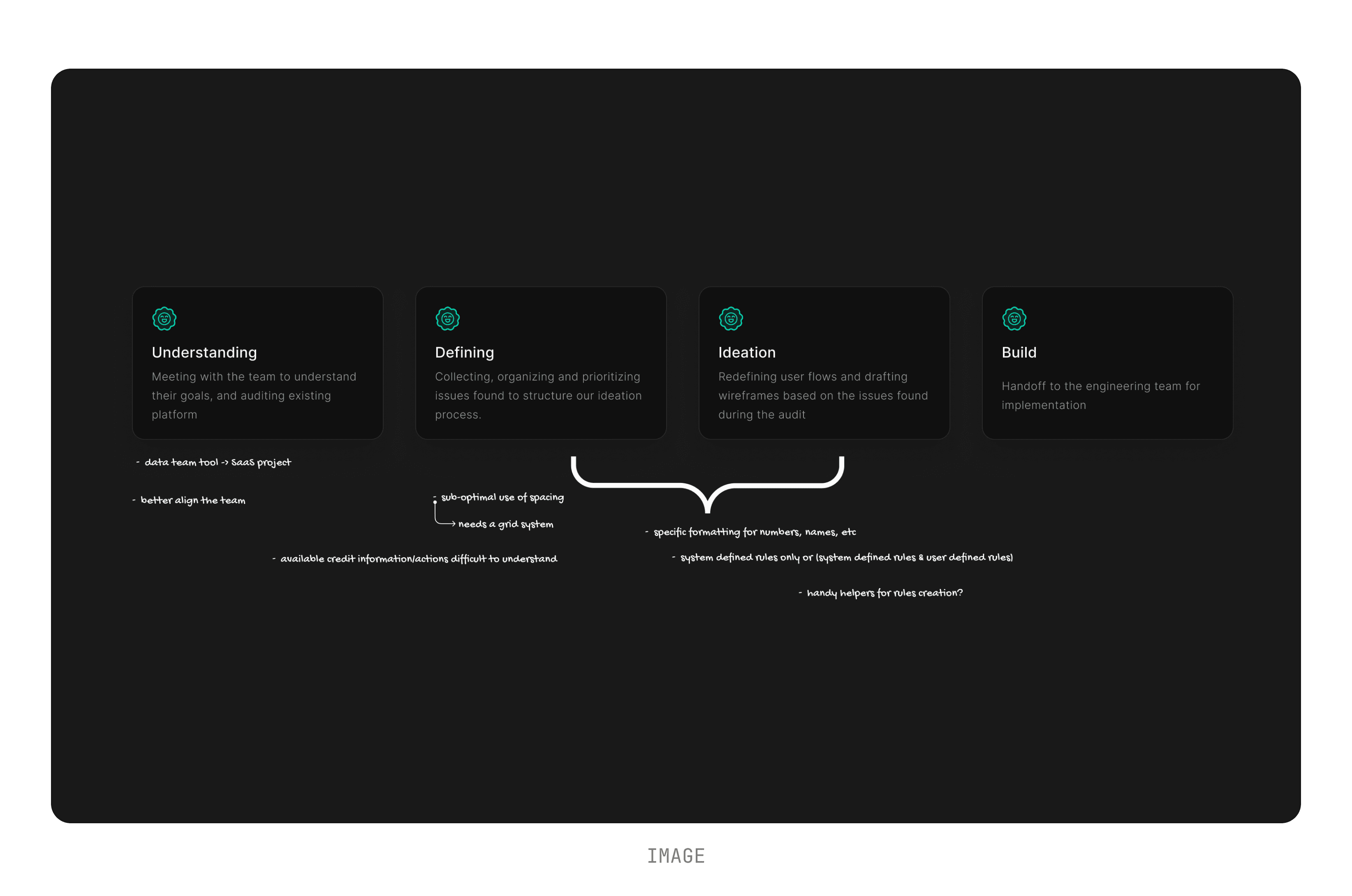
We tested early ideas with internal analysts and people in our closed beta.
The feedback was consistent.
Analysts weren’t overwhelmed because the work was hard.
They were overwhelmed because the volume was repetitive.
Hundreds of bank statements.
Similar decisions.
Predictable logic.
And then the question surfaced:
“Can the system make some of these decisions for us?”
That was the turning point.
Users didn’t just want a cleaner interface.
They wanted automation.
They wanted a system that understood their risk appetite and acted on it.
Designing the rules engine
Once the need became clear, we shifted the product in a new direction.
We explored how to let users:
Define their own rules
Set thresholds
Automate approvals
Reduce manual review
Build logic that reflected their real workflows
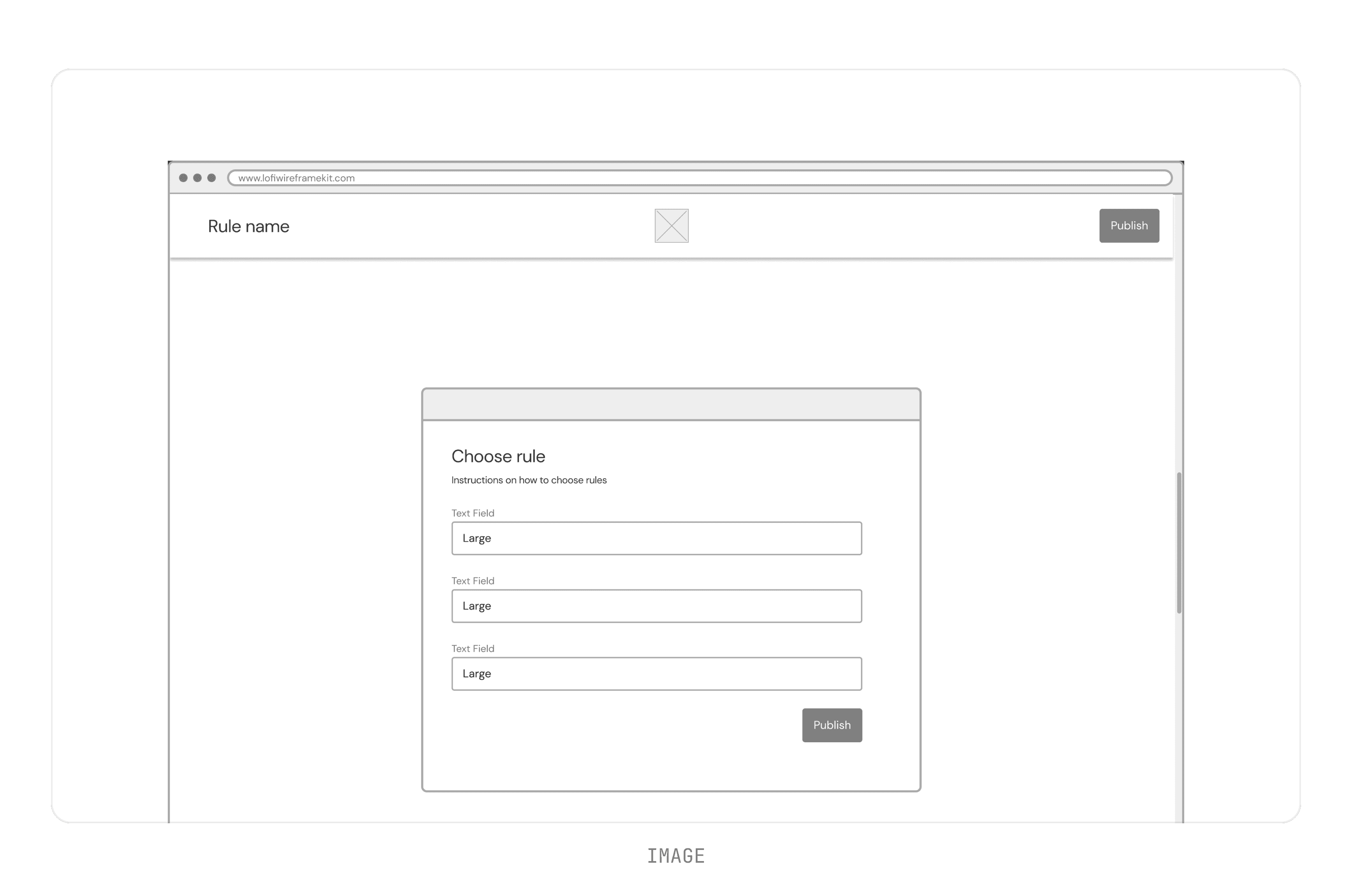
Early wireframes helped us test whether people understood the mental model.
They didn’t at first.
So we iterated:
Simplified the building blocks
Added small helpers explaining each rule type
Created system-defined rules for common scenarios
Added previews so users understood the impact before saving anything
The goal was simple:
automation without uncertainty.
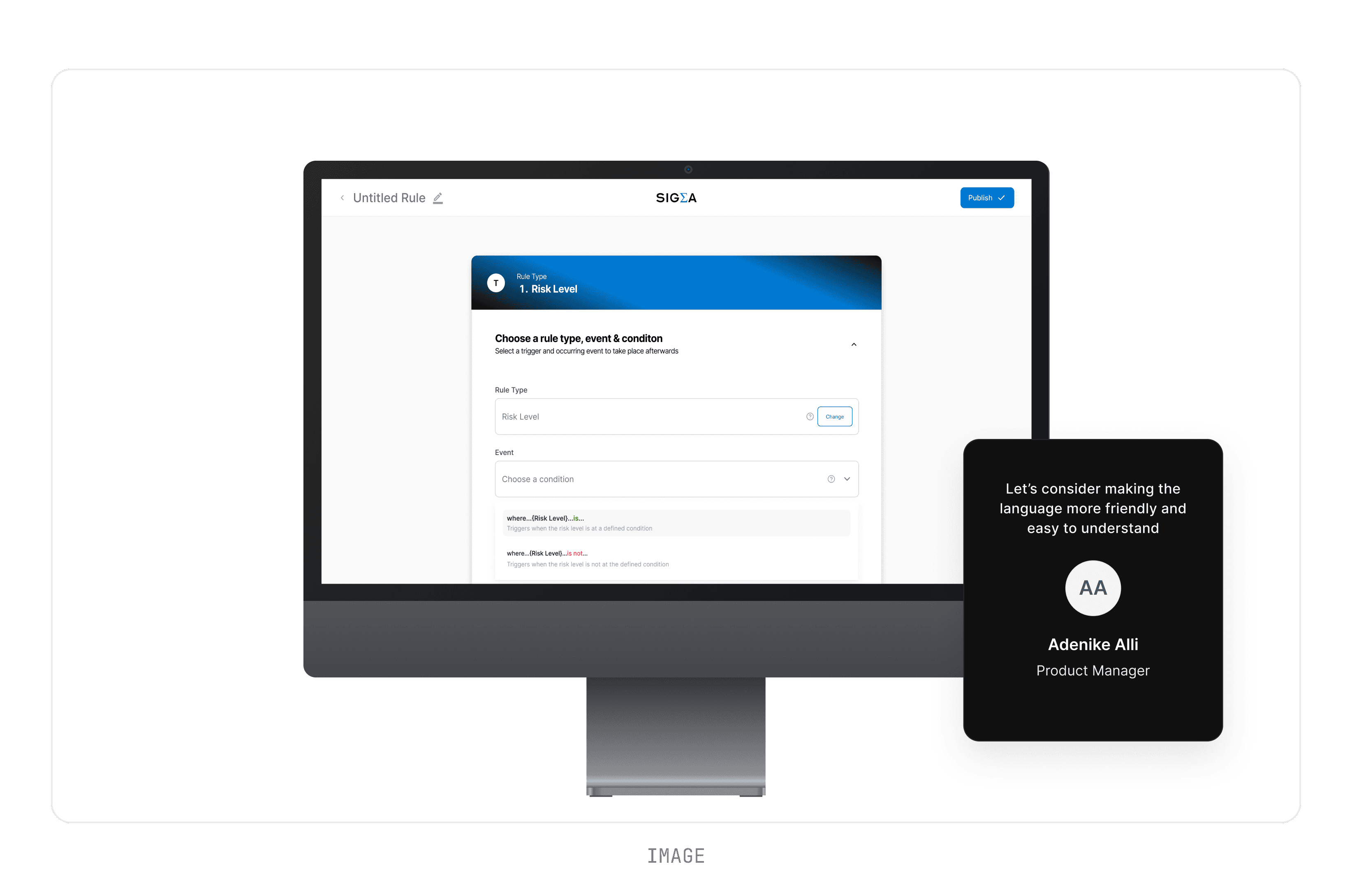
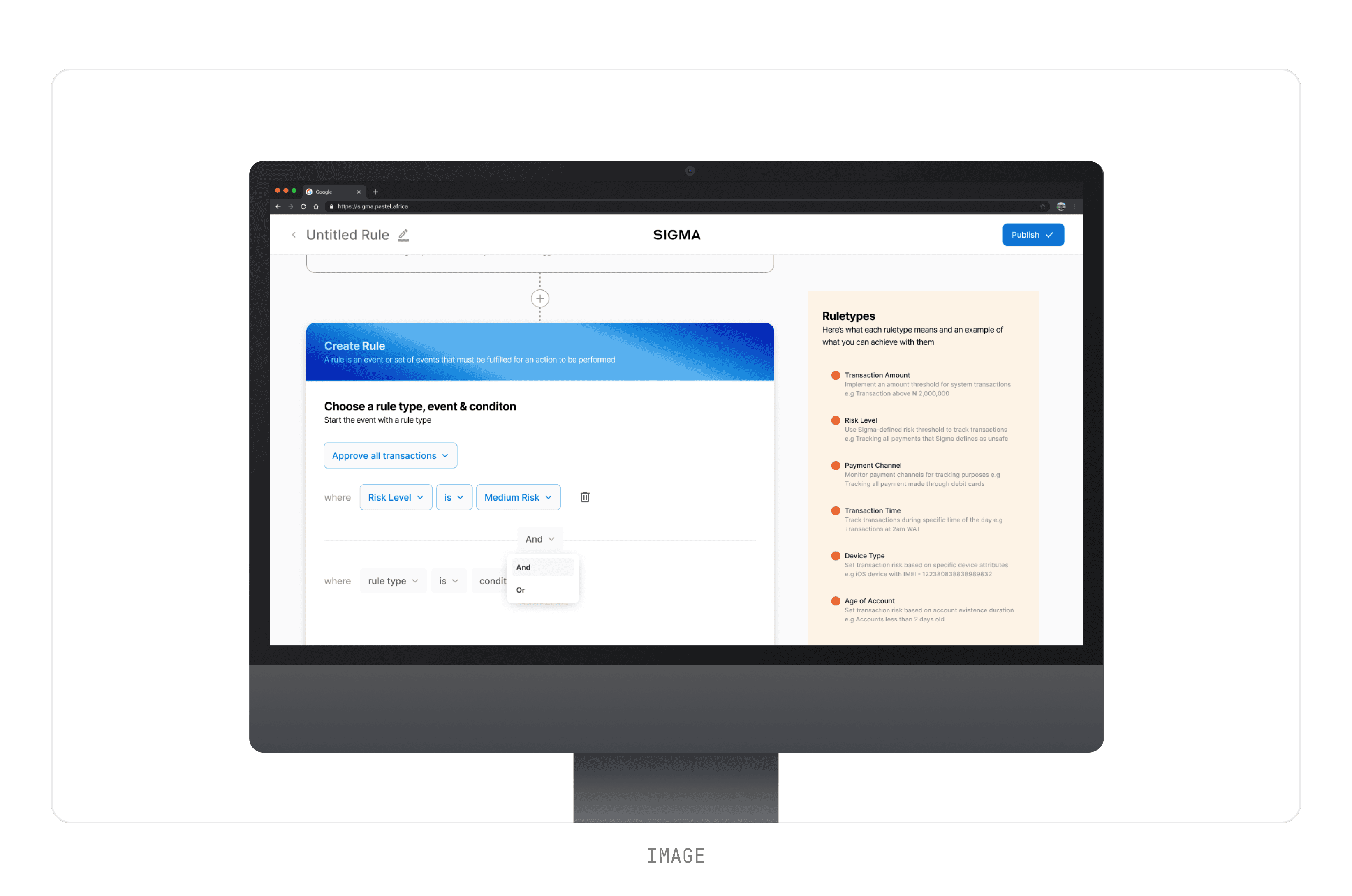
From a tool to a system
The new Sigma experience became clearer, calmer, and more intentional.
A structure users could learn instantly
A rules engine that removed repetitive decisions
A layout that handled complexity without feeling heavy
A design system built for scale
An experience driven by clarity, not cleverness
The product no longer felt like an internal tool.
It felt like a platform.
What happened after launch
The redesigned Sigma was received with excitement during closed beta.
Teams adopted the rules engine faster than expected.
Analysts spent less time on repetitive checks.
Decision-making became more consistent.
But the biggest shift was internal.
Sigma went from a side tool to a core part of the company’s AI vision.
A product built for us
became a product ready for everyone.